Teachers Tool-kit
Comprehensive Guide for Pre-school Facilitators & Caregivers
Aligned with National Education Policy (NEP) 2020
Foundational Stage | Playgroup • Nursery • LKG • UKG
Overview
Early Childhood Care and Education (ECCE) lays the foundation for lifelong learning. As envisioned in NEP 2020, the first five years focus on care, curiosity, creativity, and competence—not academic pressure.
This guide supports pre-school facilitators and caregivers with clear practices, responsibilities, and values to nurture every child holistically.
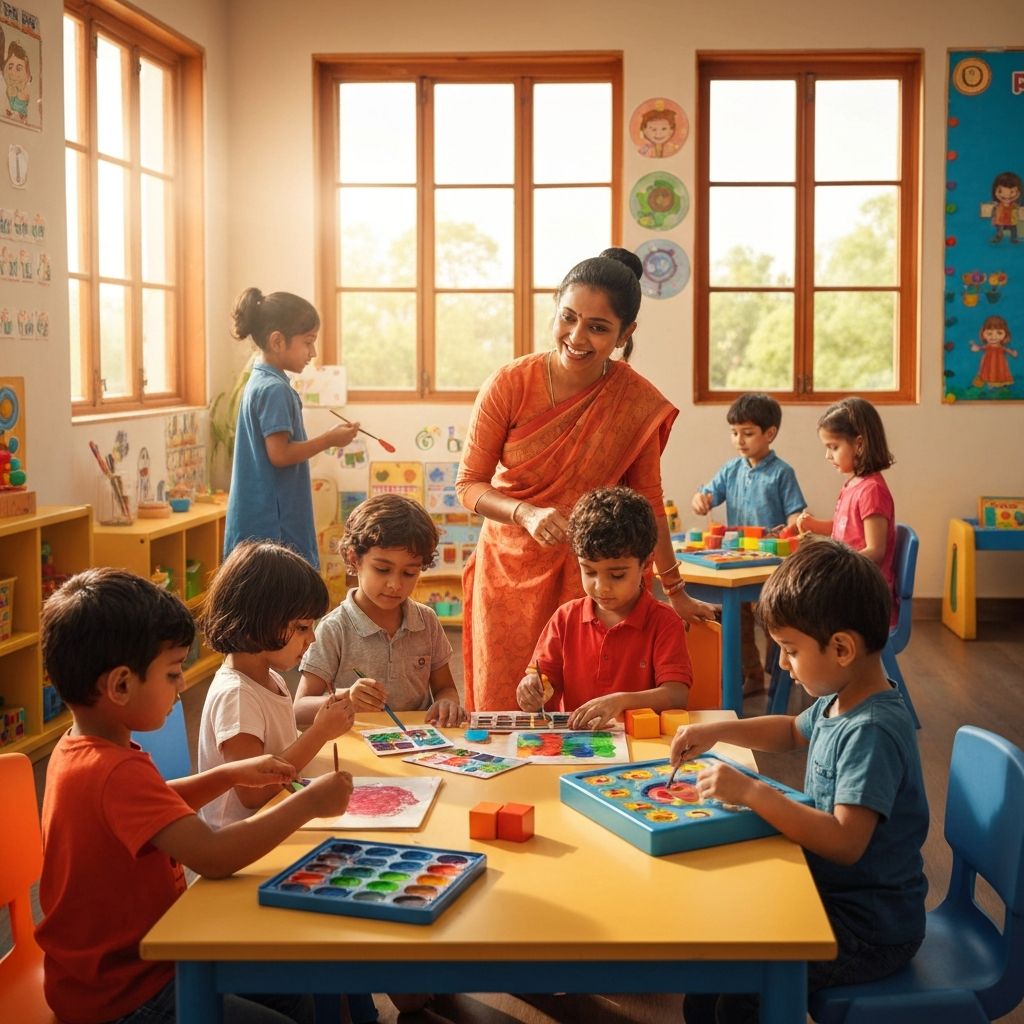
Why This Guide Matters
Role Transformation
From instructor to facilitator-caregiver
Play-Based Learning
Aligns daily practices with joyful learning
Safety & Inclusion
Promotes child safety and wellbeing
Professional Growth
Supports reflective practice
Who This Is For
Core Principles of ECCE (NEP 2020)
These foundational principles guide all early childhood education practices
Child-Centric Learning
- •Each child develops at their own pace
- •No ranking, labelling, or comparison
- •Progress over performance
Learning Through Play
- •Play is the primary pedagogy
- •Exploration, imagination, and discovery lead learning
Joyful & Stress-Free Environment
- •No exams or homework
- •Safe, nurturing, and engaging spaces
Domains of Holistic Development
Five interconnected areas of child development
Physical & Motor Development
Gross and fine motor skills through movement and hands-on activities
Outdoor play, balance games, drawing, threading
Social & Emotional Development
Empathy, sharing, self-expression
Circle time, cooperative play, positive discipline
Language & Communication
Listening and speaking before reading and writing
Stories, rhymes, conversations, mother-tongue exposure
Cognitive Development
Curiosity, problem-solving, logical thinking
Sorting, matching, puzzles, open-ended questions
Creative & Aesthetic Development
Art, music, movement, drama
Free expression, diverse materials, process over product
Classroom Practices
Daily Routine
A balanced ECCE day includes:
- Arrival & free play
- Circle time
- Story/rhyme session
- Activity-based learning
- Outdoor play
- Reflection & dispersal
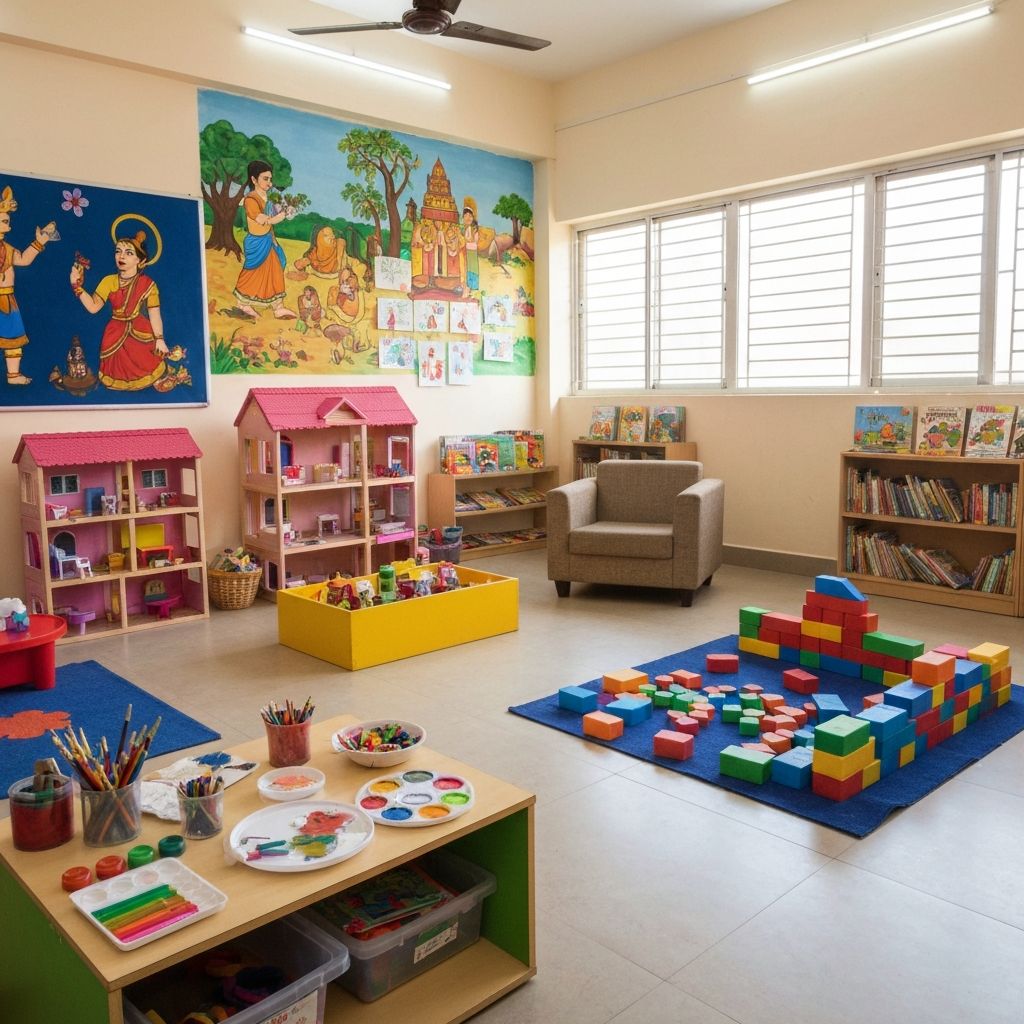
Learning Environment
- Child-friendly furniture
- Learning corners (books, art, blocks)
- Clean, safe, inclusive spaces
Inclusion & Equity
- Respect diverse abilities and backgrounds
- Adapt activities to individual needs
- Use inclusive language and examples
Health, Nutrition & Safety
Health & Hygiene
- • Regular handwashing routines
- • Clean classrooms and toys
- • Early identification of illness
Nutrition Awareness
- • Encourage healthy food habits
- • Coordinate with parents
- • Avoid food shaming
Safety & First Aid
- • Basic first-aid readiness
- • Emergency preparedness
- • Constant, attentive supervision
Ethical & Professional Conduct
Child Protection
- Zero tolerance for physical or emotional abuse
- Appropriate boundaries at all times
- Responsible reporting of concerns
Professional Values
- Confidentiality and respect
- Punctuality and preparedness
- Commitment to continuous learning
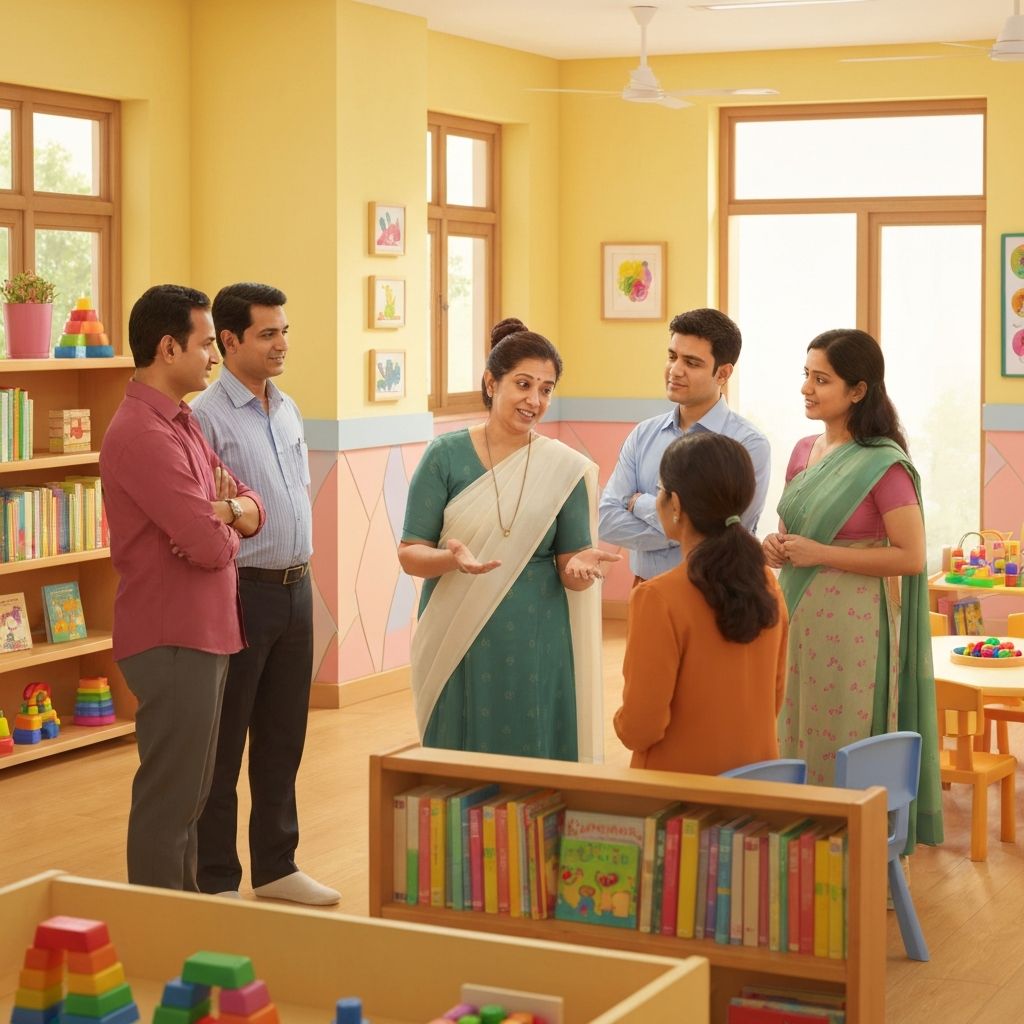
Partnering with Parents
- Share developmental observations, not complaints
- Educate families on play-based learning
- Build trust through regular communication
Parents are partners in a child's learning journey.
Assessment as Observation
Formal testing is discouraged at the foundational stage.
Use Instead:
- Continuous observation
- Anecdotal records
- Checklists and child portfolios
Goal:
Understand development, not grade performance
Continuous Professional Development
A future-ready facilitator:
Reflects on daily practice
Regular self-assessment and improvement
Updates skills regularly
Stays current with ECCE best practices
Engages in training
Pursues certification and workshops
Grows professionally
From caregiver to professional educator
Our Commitment
We believe that when care meets competence, learning becomes lifelong. This guide empowers facilitators and caregivers to create nurturing, inclusive, and joyful early learning environments—building strong foundations for every child.
Start shaping young futures
One joyful classroom at a time.